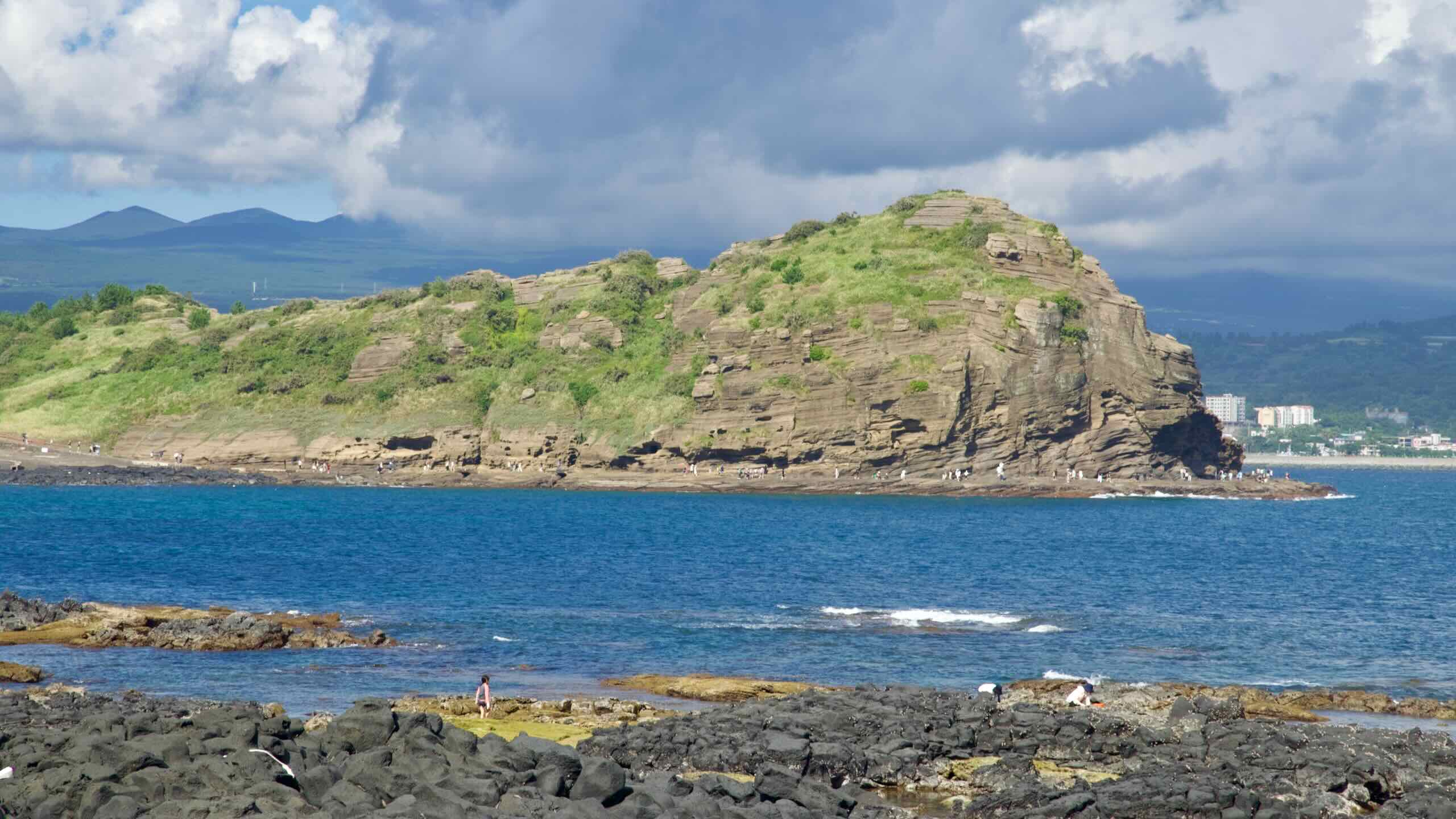
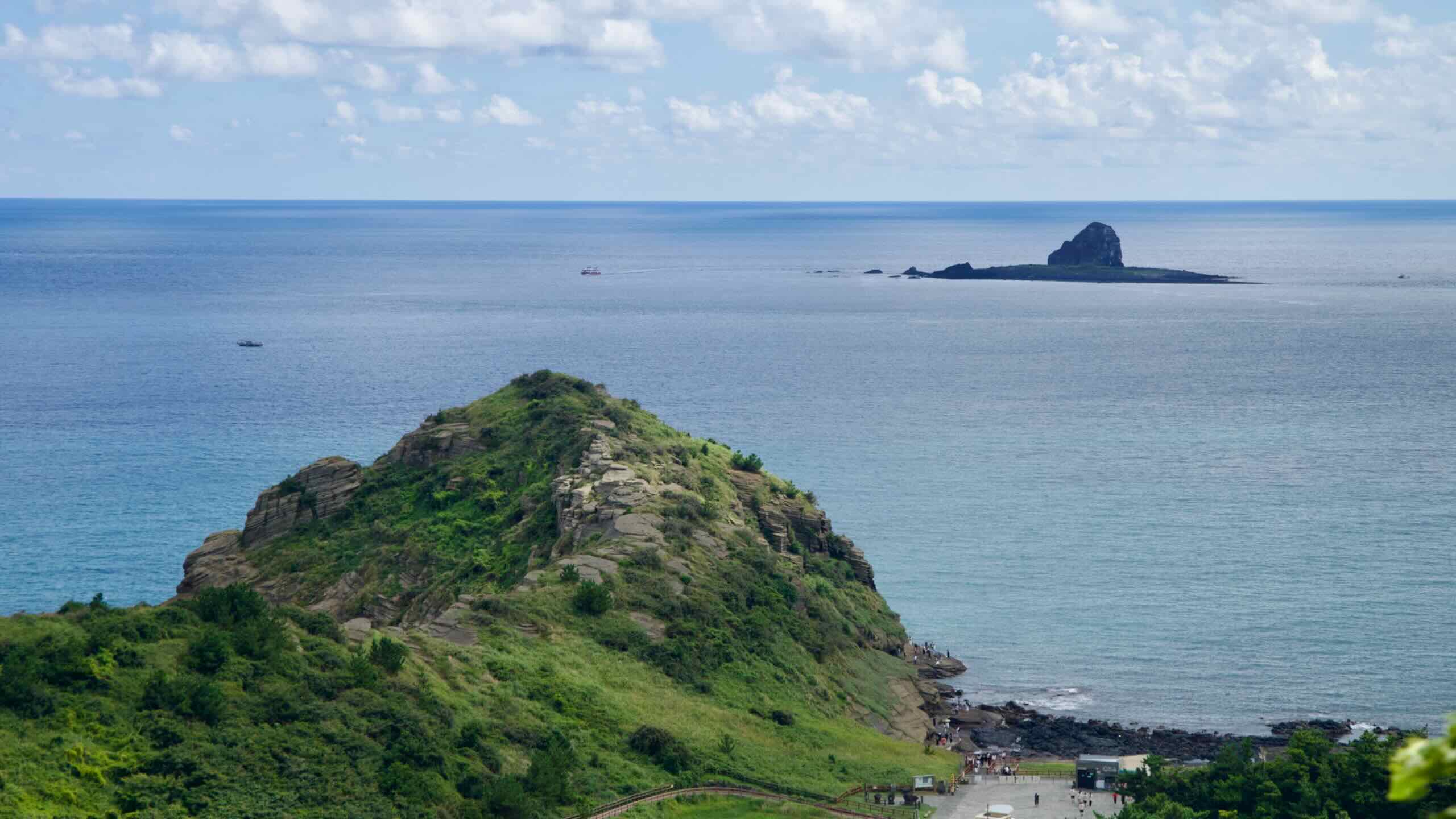
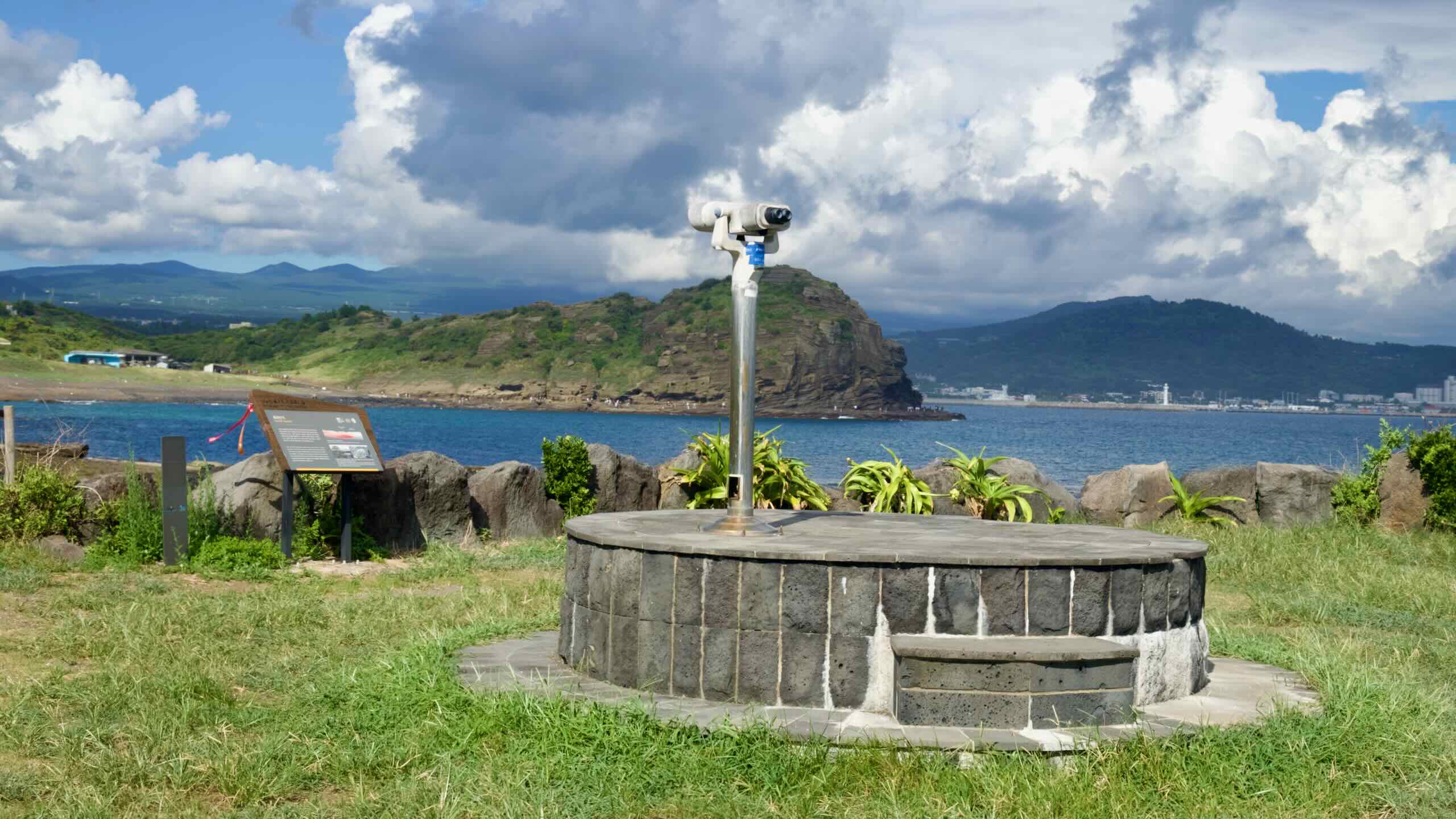
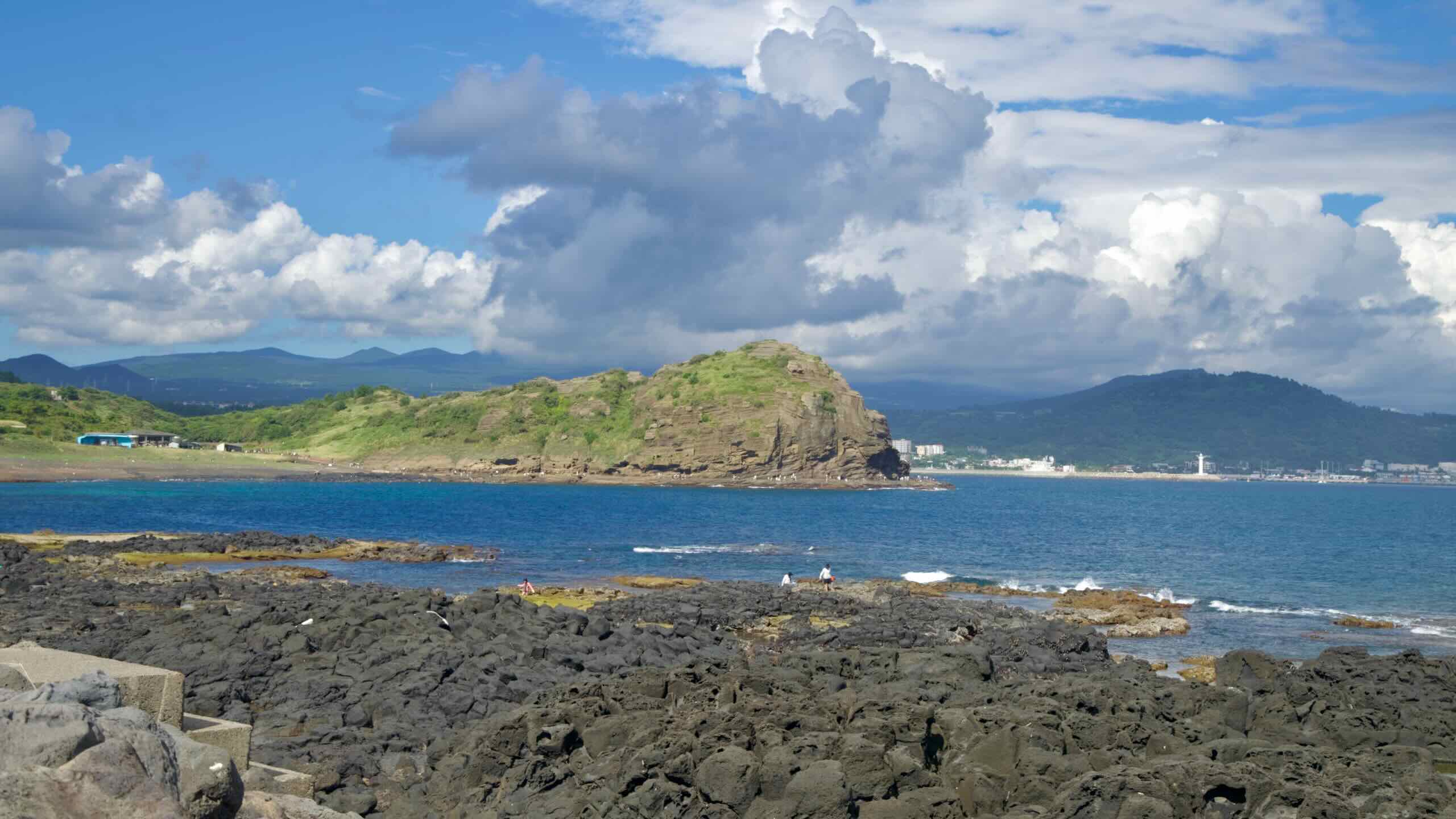
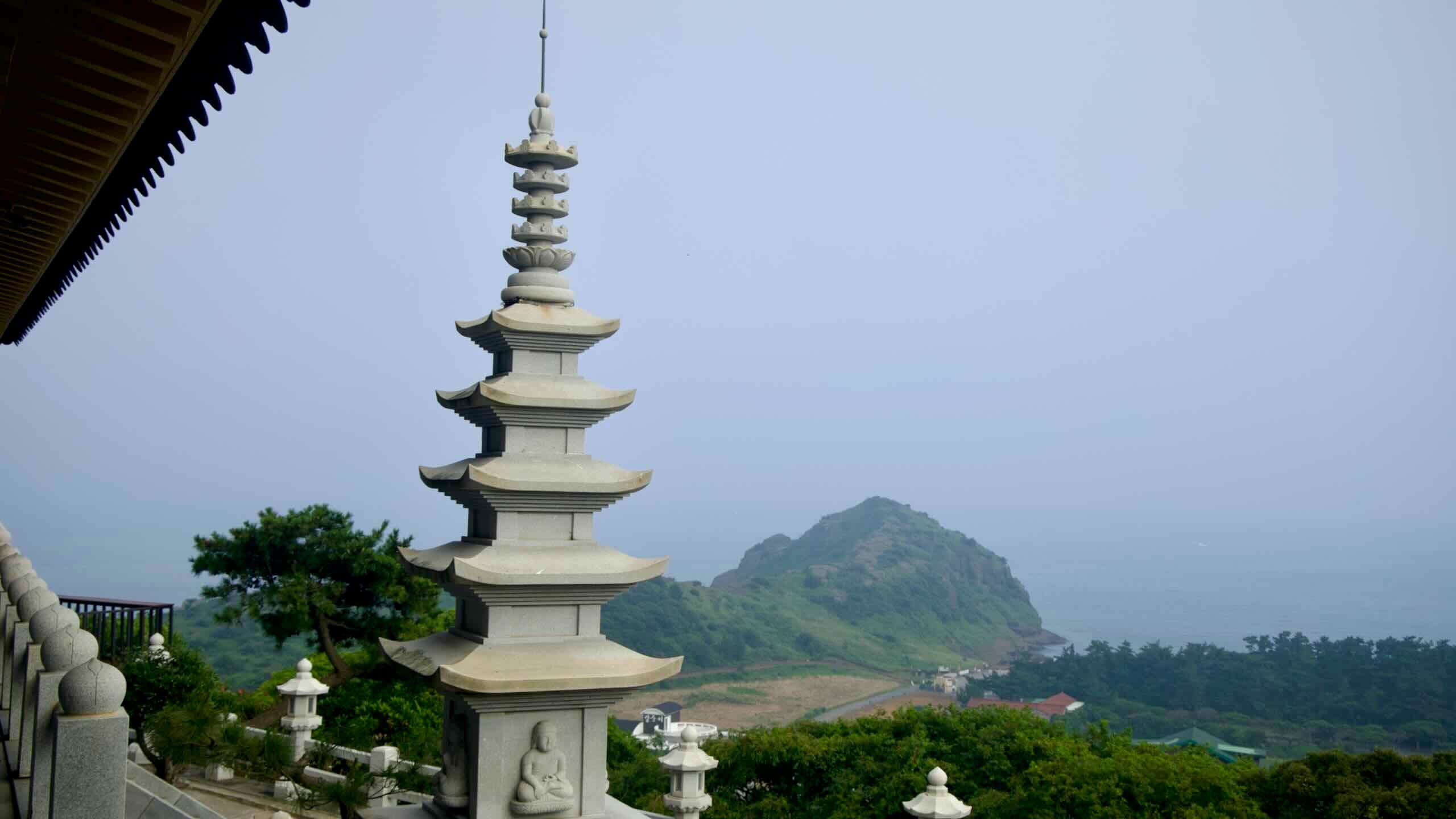
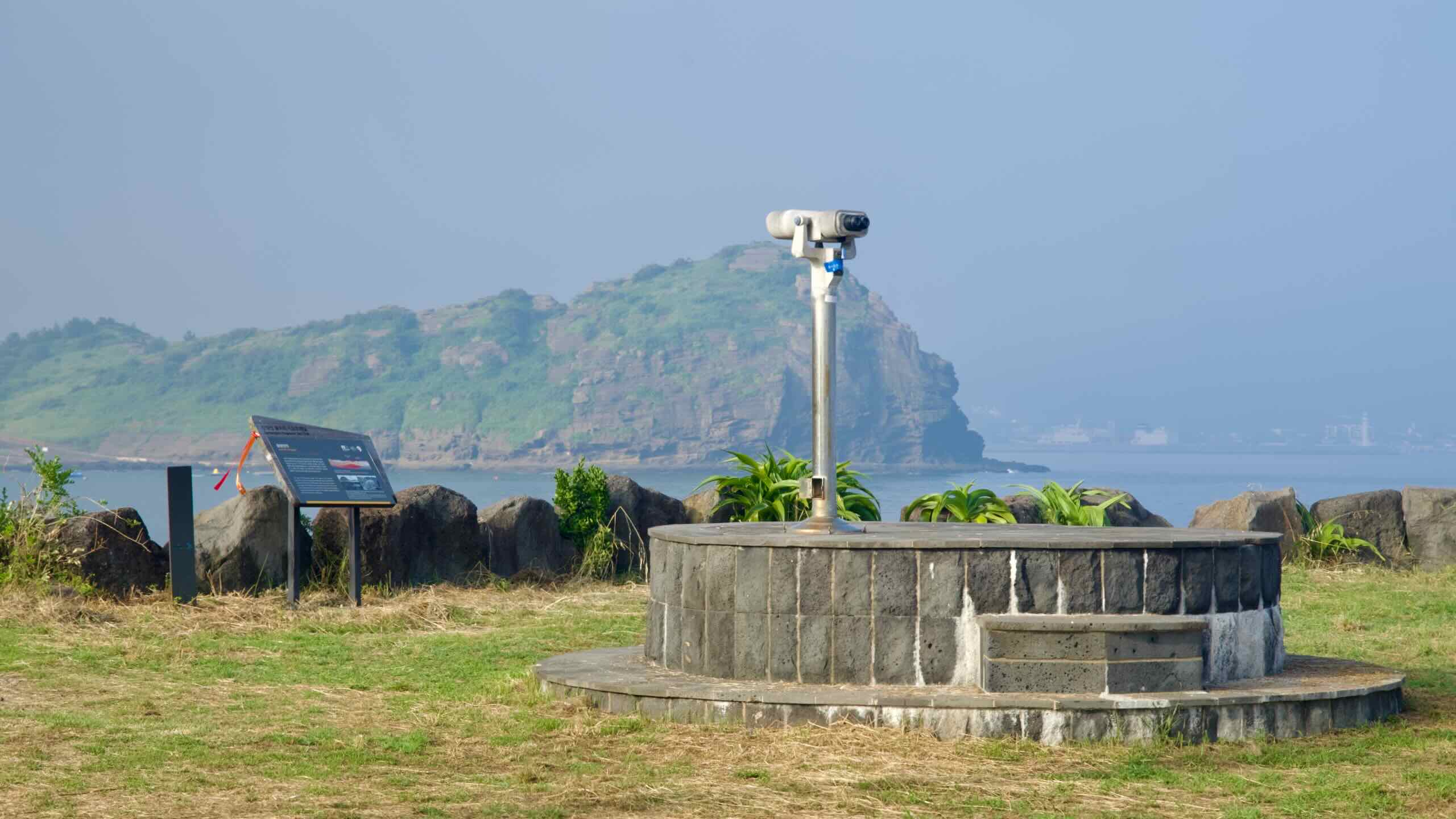
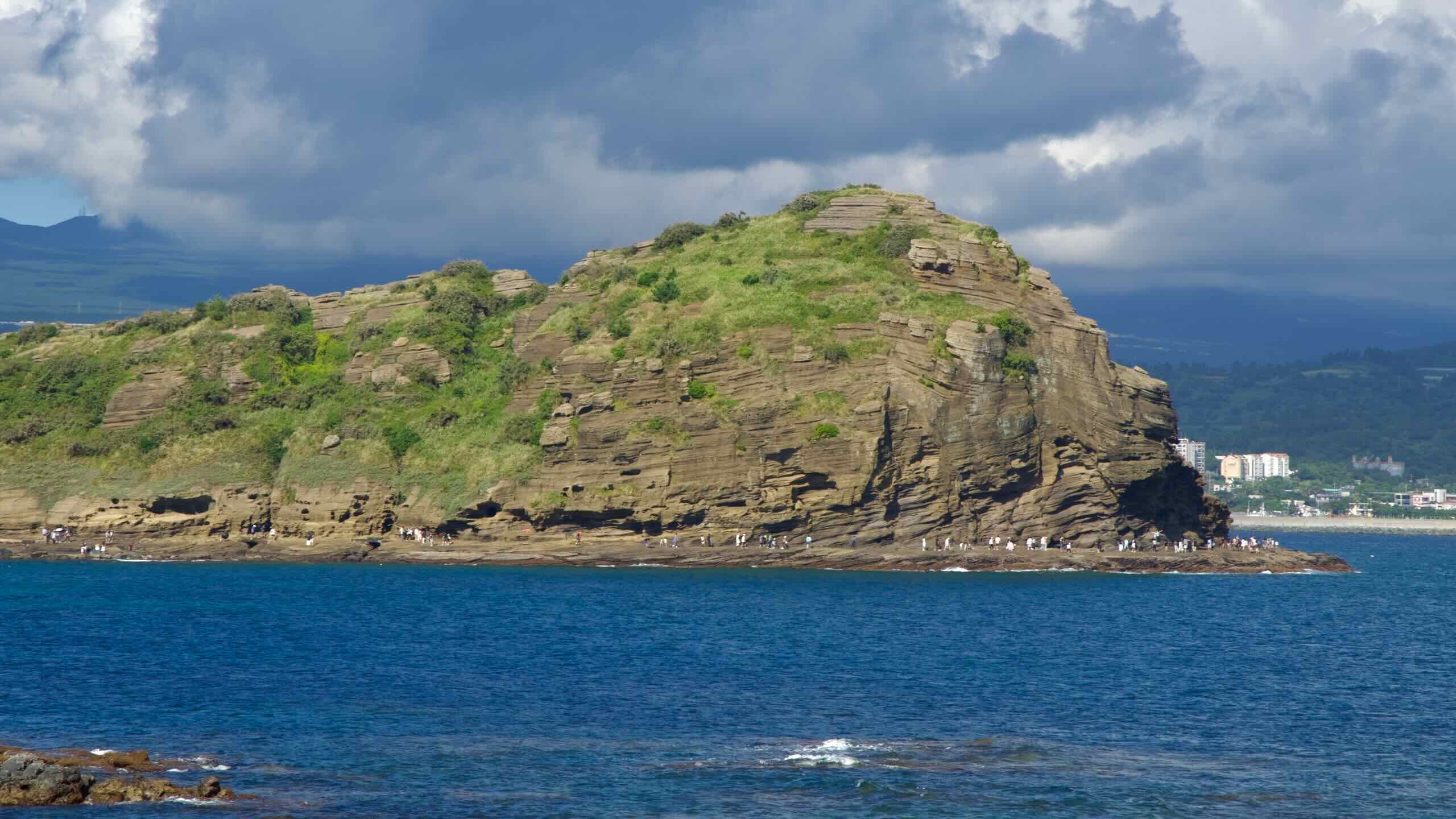
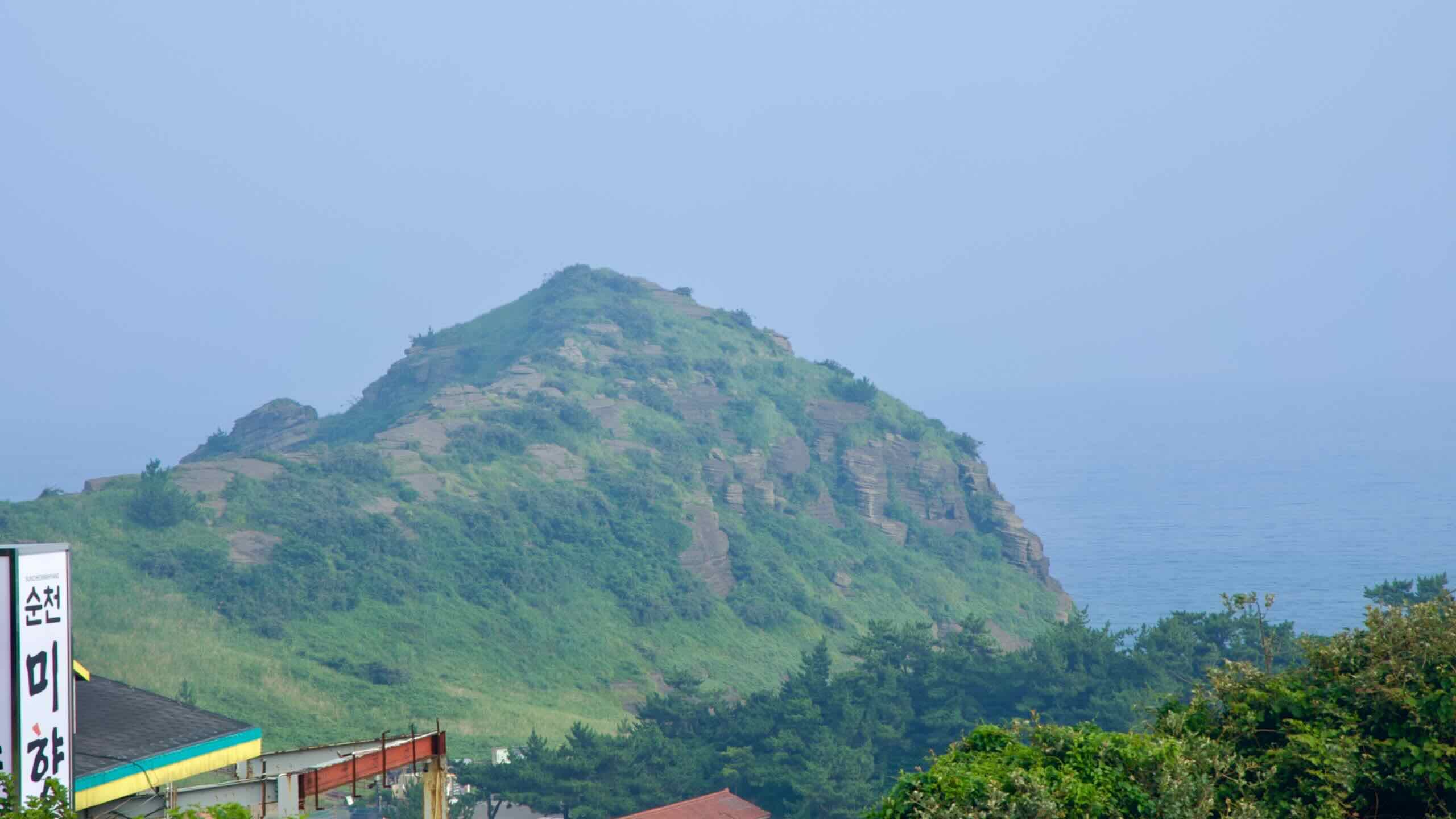
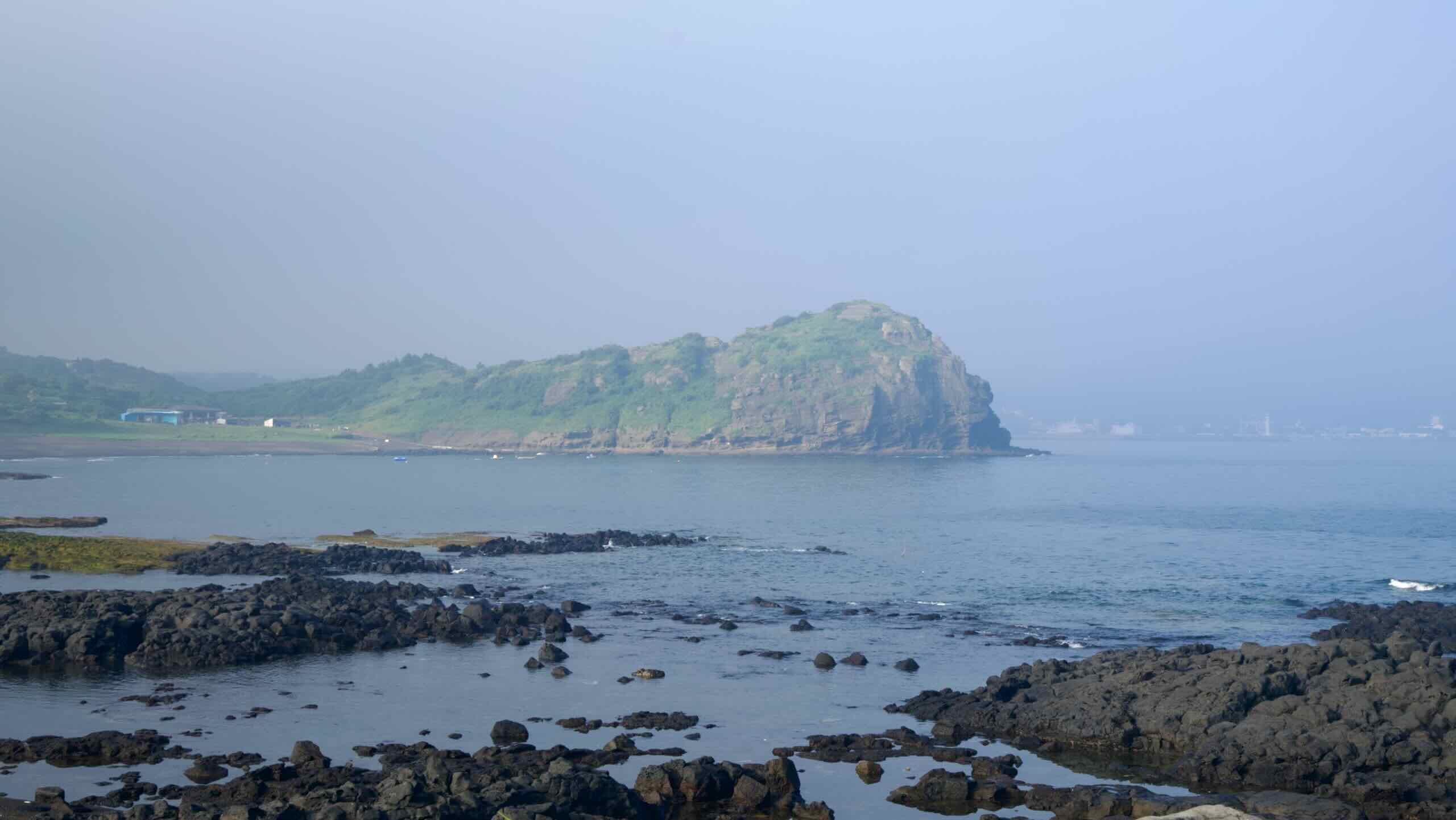
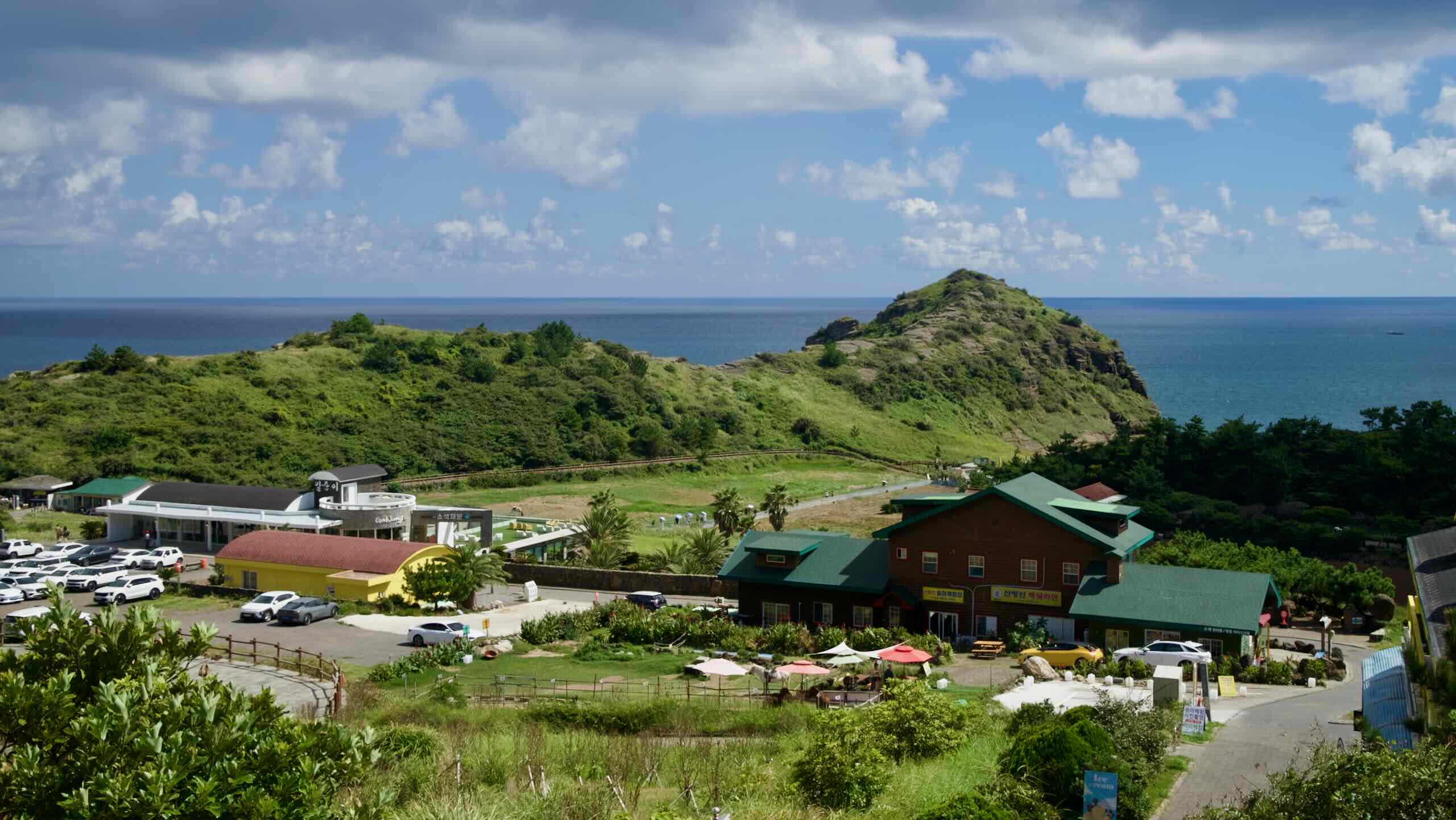
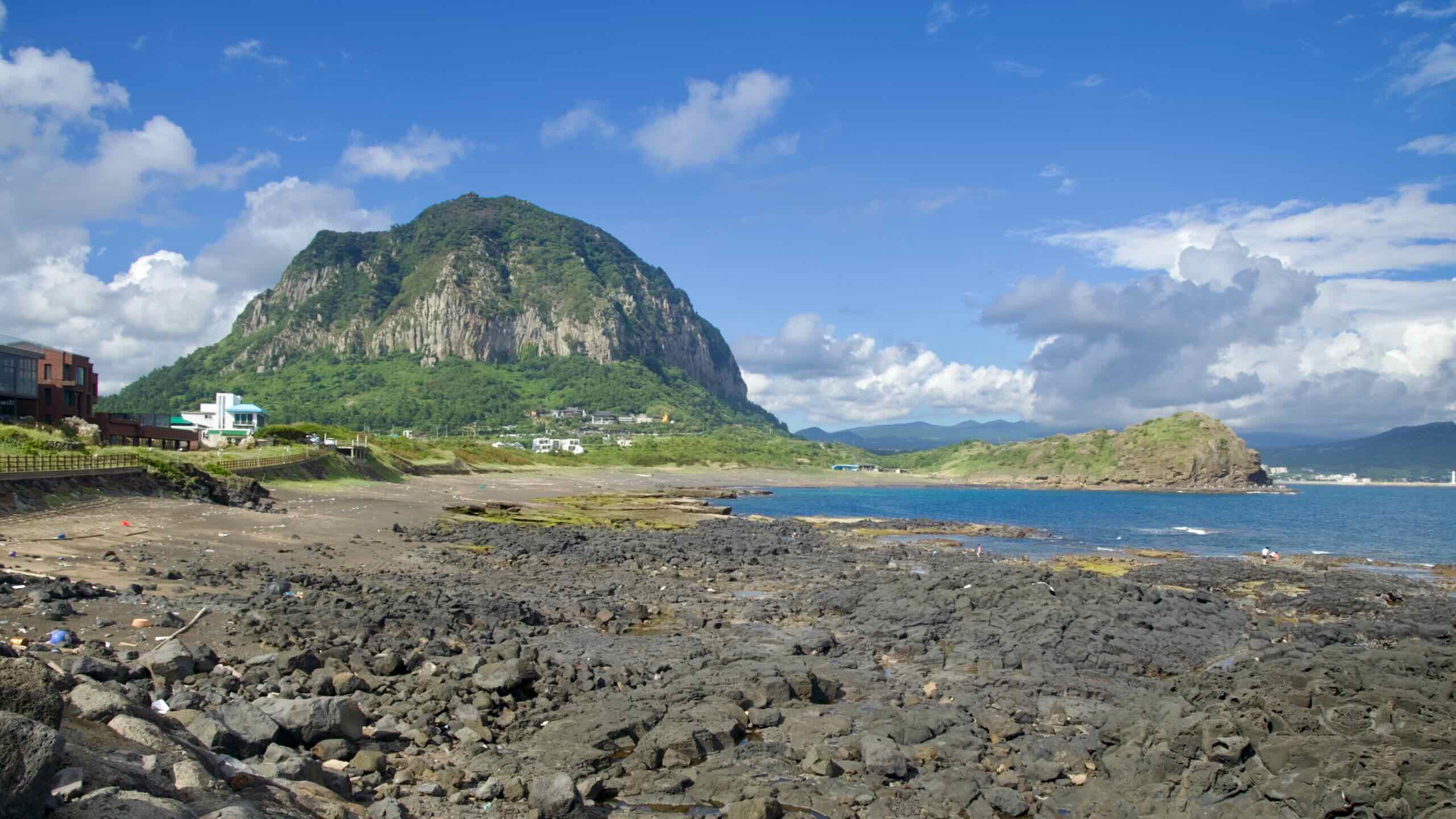
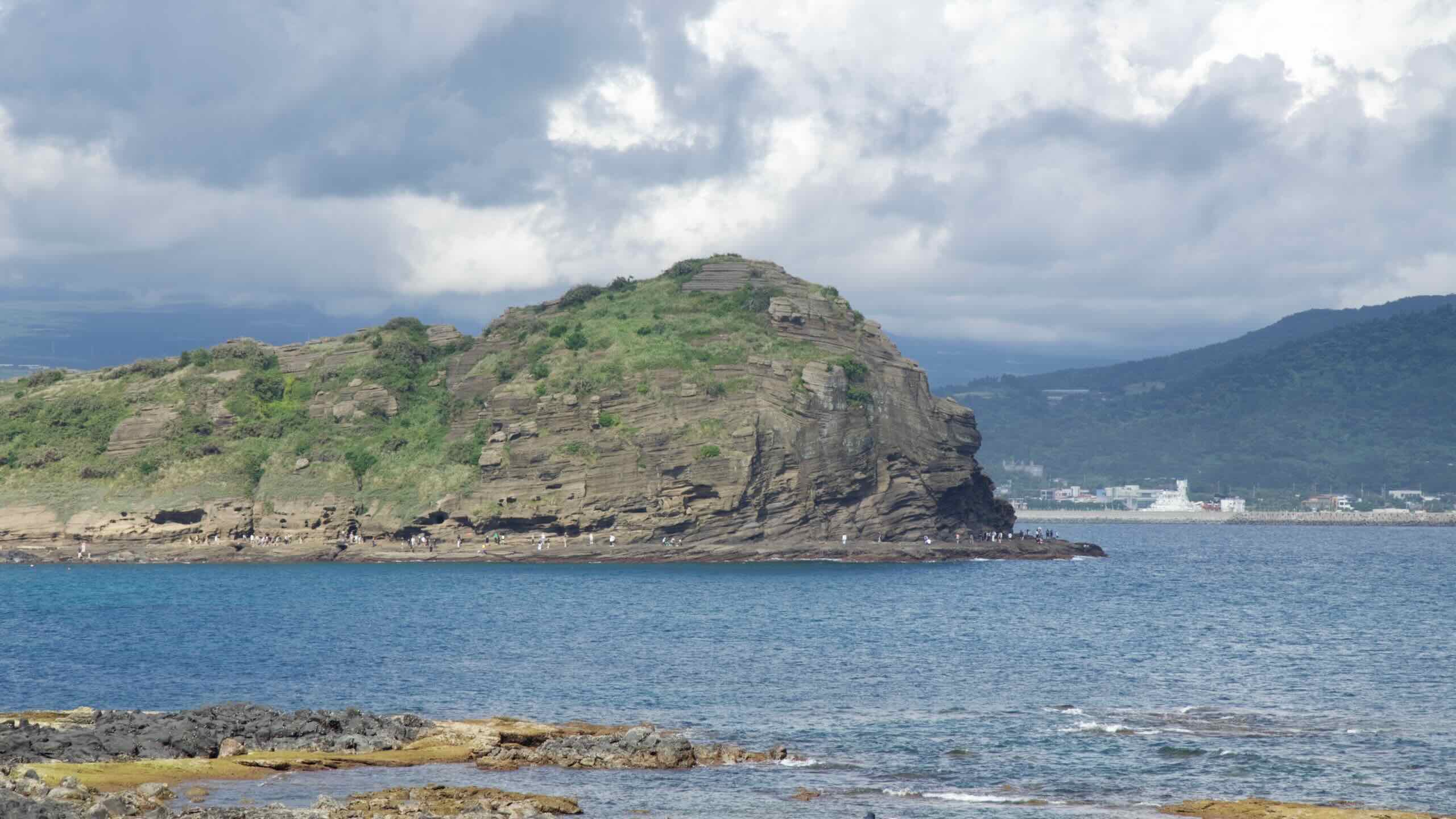
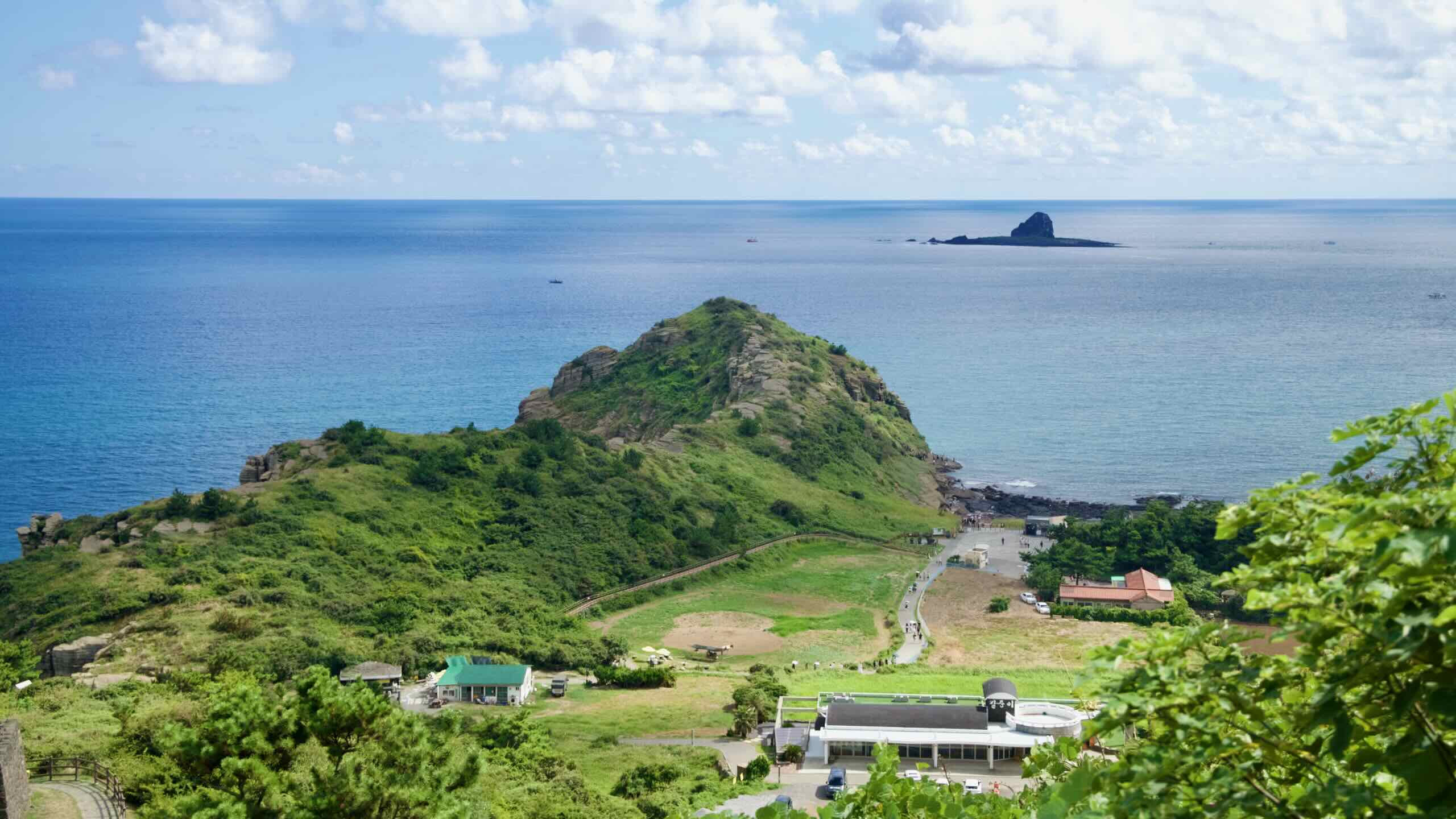
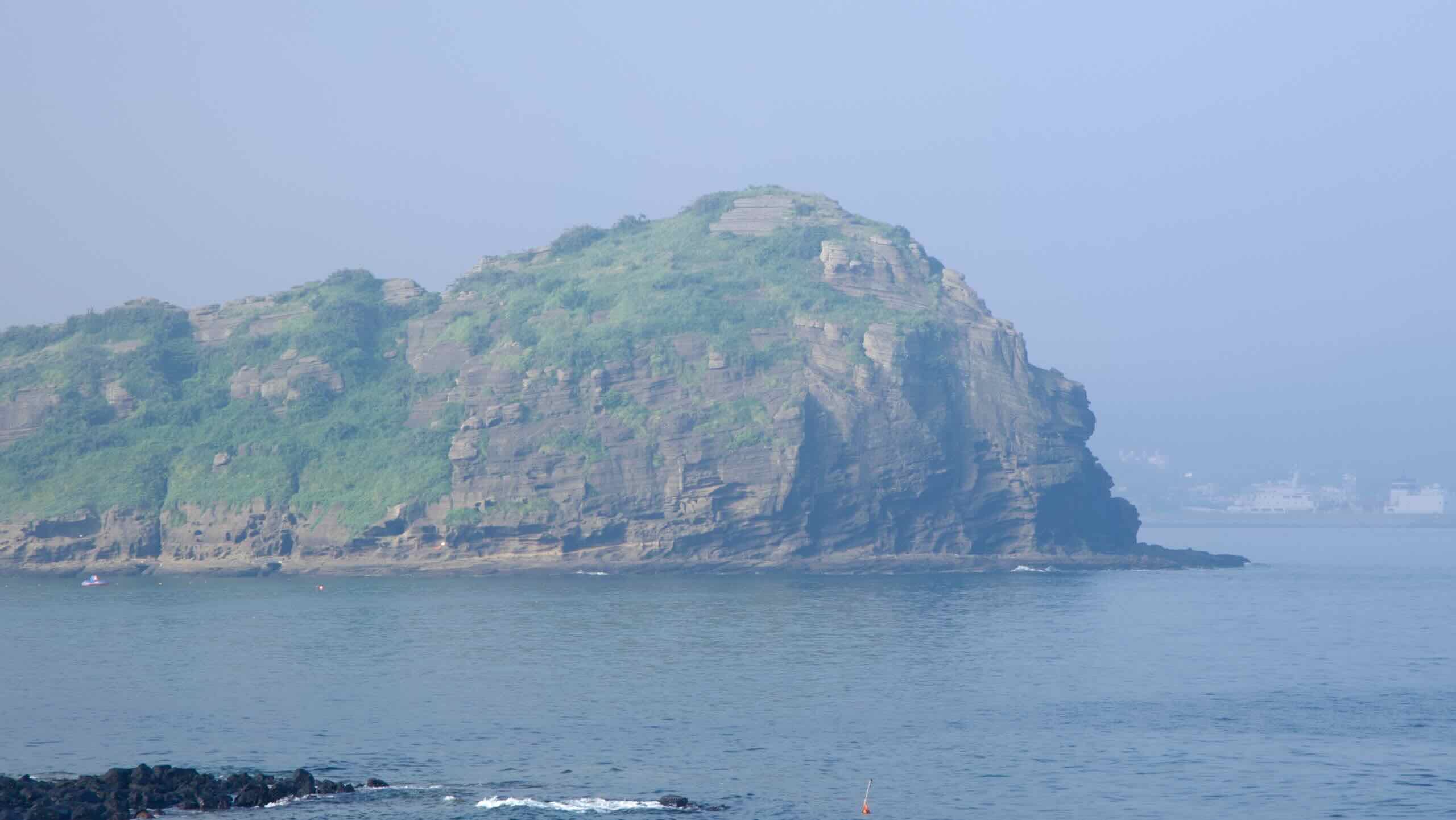
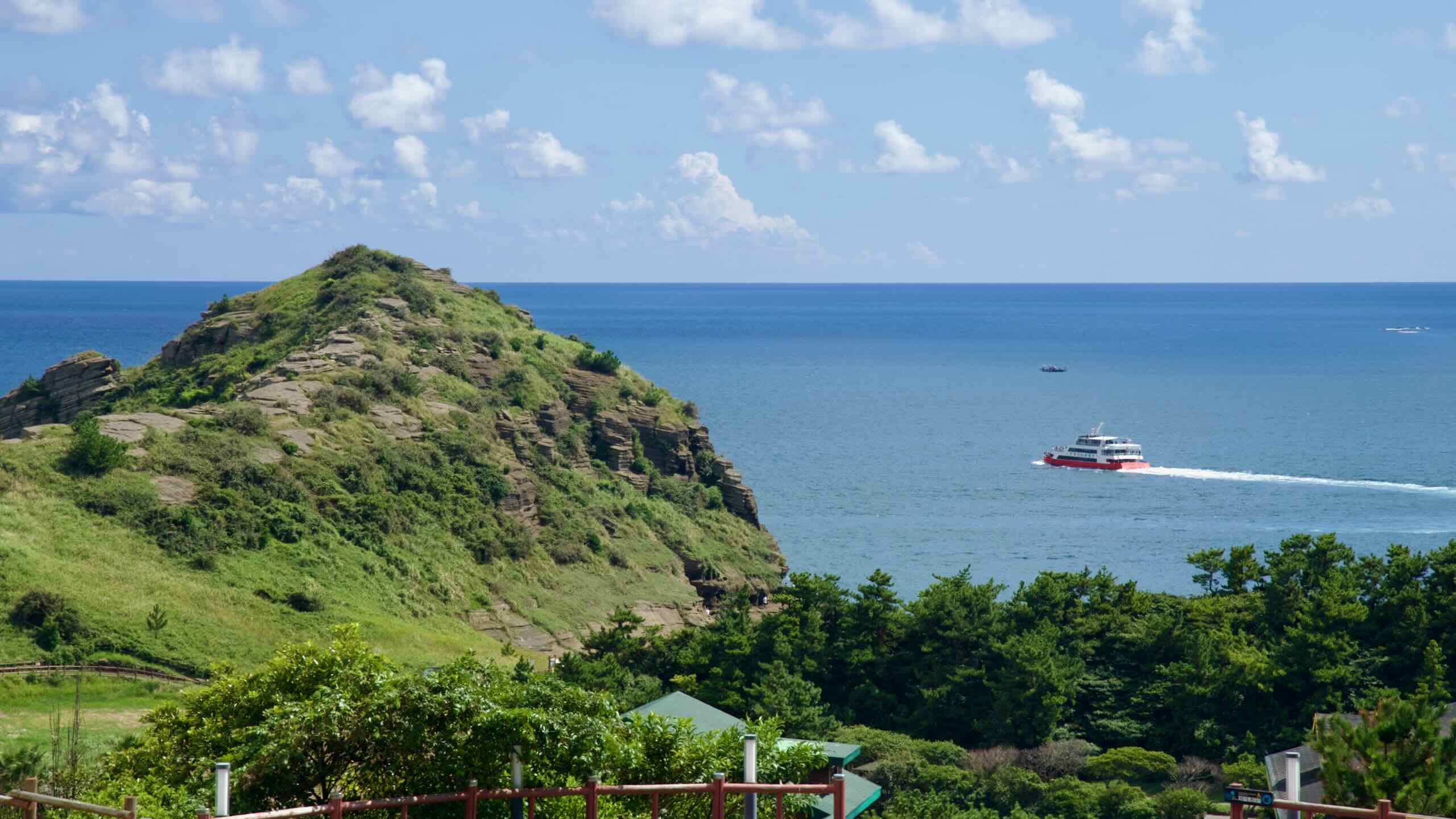
Yongmeori Coast (용머리해안; map), seated at the base of Sanbang Mountain (산방산; map; Sanbangsan) in Seogwipo, is a geological gem known for its dramatic sandstone cliffs, tidal pools, and history. The name means “Dragon’s Head Coast,” because it looks like a dragon dipping its head into the sea.
Underwater eruptions built this coast, and ages of erosion carved the cliffs into their wild shapes. Yongmeori is part of a UNESCO Global Geopark and one of Jeju’s oldest volcanic formations, a window into how the island came to be.
Key Features
Let’s take a look at some of the Yongmeori Coast’s key features.
Geology
Yongmeori Coast’s cliffs are the product of underwater volcanic eruptions and subsequent erosion, resulting in features such as parallel strata, tafoni (honeycomb weathering patterns), and sea caves.
You’ll also spot fault lines and unusual sedimentary patterns that show how tectonic and marine forces shaped Jeju. Rising 30 ~ 50 meters and running over 600 meters along the coast, the cliffs are a natural gallery for geologists and casual visitors alike.
Along the base, you’ll find tidal pools and hollows that look like little rooms carved out by the waves.
Near the entrance, the Hamel Monument honors Hendrick Hamel (1630 ~ 1692), the Dutch sailor shipwrecked here in the 17th century. He was held in Korea for the next 13 years, and his journal became one of the first Western accounts of the Joseon Dynasty, introducing Korea to European readers.
Steeped in mythology, Yongmeori Coast (용머리해안) has long been tied to tales of its dragon-like shape and its geomantic energy.
Legend says the coast’s shape channeled energy powerful enough to produce a great king. Word reached Qin Shi Huang (259 ~ 210 BCE), the first Emperor of China, who sent his geomancer Hojongdan to cut that energy off. When Hojongdan slashed the dragon’s tail and back, the story goes, blood poured out and nearby Sanbangsan wailed for days.
Haenyeo
Yongmeori’s intertidal zones are packed with sea life, making it a hub for Jeju’s haenyeo, female divers who harvest seafood like abalone and sea urchins using techniques passed down through generations.
Haenyeo often set up stalls along the trail, so you can sample freshly caught seafood right where it came from.
Visitor Information
As a designated natural monument (No. 526), Yongmeori Coast is protected for its geological and cultural value. Stay on the marked path and out of restricted areas. The sandstone wears away easily, so every footstep counts.
Free for seniors (65+), children under 6, and residents of Jeju with proper identification.
Combination tickets with nearby Sanbanggulsa Temple are available (2,500 KRW for adults).
Accessibility:
The path runs right along the water, so access depends on the weather and tides. It usually opens around 9:00 AM ~ 5:00 PM, but times change daily and are posted on the official Seogwipo tourism Instagram account (@6sot_official). You can also call the ticket office (064-760-6321).
Time to Explore:
A full loop takes about 30 ~ 40 minutes, depending on the tides and your photo stops.
Facilities:
Parking, restrooms, and small seafood stalls are nearby. Wear comfortable shoes; the rocks are uneven.